Construction Drone Services Pricing: What to Charge
From pre-construction surveys to thermal inspections, here is what construction clients pay for drone data and how to price your services.
Construction drone services span every project phase, from $300-5,000 pre-construction surveys to $200-400 weekly progress visits. Monthly retainers of $800-4,000 for progress monitoring provide the most sustainable model. Contracts must clearly define deliverables, turnaround, and payment terms. (Typical U.S. rates as of late 2026 — vary by market.)
Construction projects run on tight budgets and tighter schedules. As a Part 107 certified pilot, you already know your drone can save a general contractor time and money. But figuring out what to actually charge for that value is a completely different challenge. Undercut your prices, and you will burn out flying for pennies while covering expensive software subscriptions. Overprice your services, and you lose the bid to another pilot down the street.
This guide breaks down exactly what construction clients expect to pay for drone services across every project phase, so you can price your jobs with confidence and build a sustainable business.
Pre-Construction Aerial Surveys: $300 to $5,000
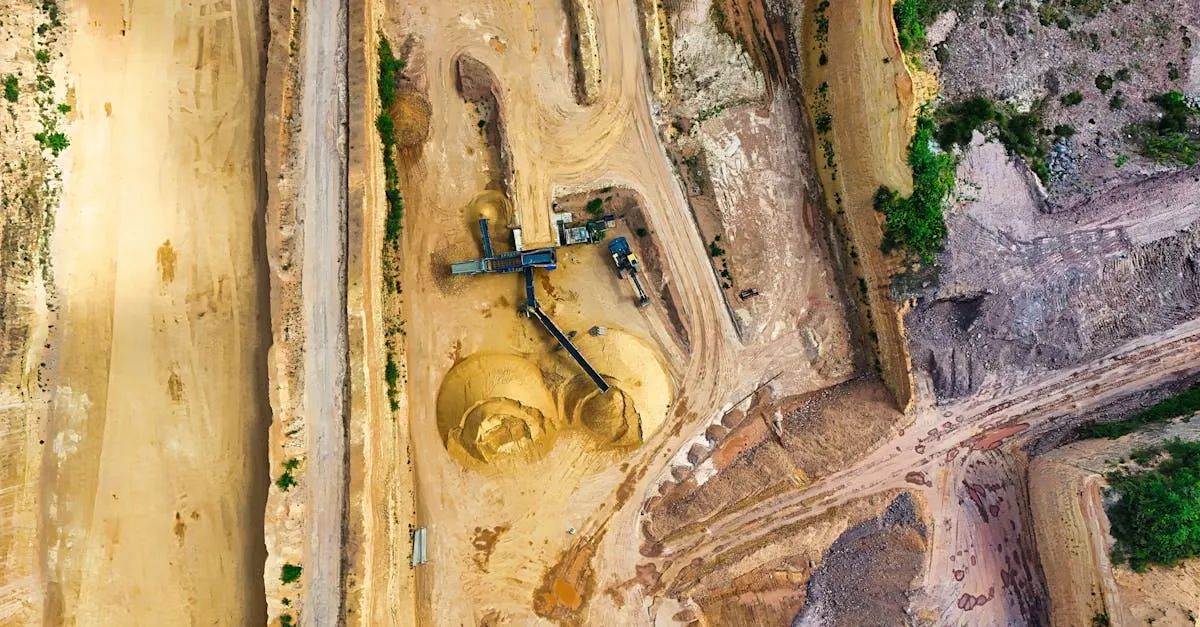
Before any dirt moves, developers and civil engineers need to understand the lay of the land. This phase usually involves topographic maps and high-resolution site selection imagery.
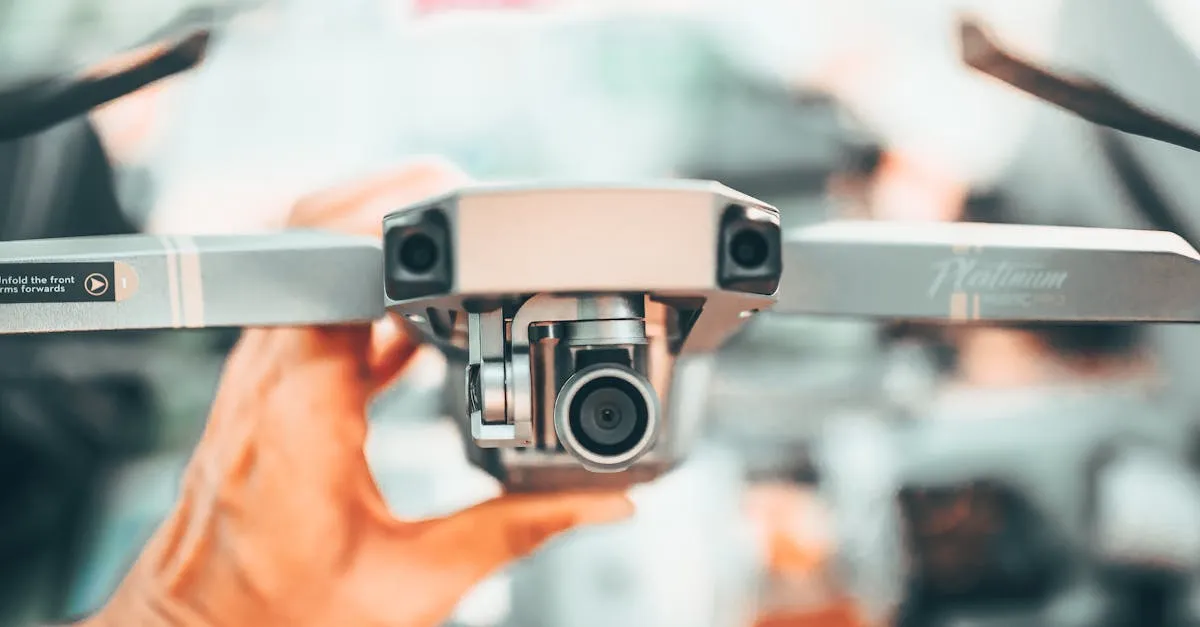
A basic 10-acre site with minimal tree cover might take you two hours to fly and process, landing around $300 to $500. You can easily handle this with standard photogrammetry software and a prosumer drone like the DJI Air 3S.
However, if the client needs high-accuracy topography for a 100-acre commercial development, you are looking at $3,000 to $5,000. The price jumps significantly here because of the ground control points (GCPs). If you have to hire a licensed surveyor to set GCPs, or if you are using an RTK/PPK system to achieve survey-grade accuracy, your costs and liability go up. The client is paying for data they can trust to make million-dollar earthwork decisions, so your pricing needs to reflect that level of responsibility.
Earthwork and Grading Analysis: $500 to $2,000 per Analysis
Once the excavators show up, the site changes daily. Contractors need to know exactly how much dirt has been moved to verify the work of their grading subcontractors. This is where cut/fill volume analysis comes in. You will fly the site, process a dense point cloud, and compare it against a baseline surface to calculate cubic yards of dirt.
Because this data directly dictates how a subcontractor gets paid, accuracy is absolutely critical. Expect to charge $500 to $2,000 per analysis. A simple single-cell cut/fill on a small residential site sits at the lower end of that range. Multi-zone analysis across a large commercial grading project pushes toward the $2,000 mark, especially if the client wants multiple elevation comparisons in a single report.
Weekly and Monthly Progress Monitoring: $200 to $400 per visit, $800 to $4,000 per month
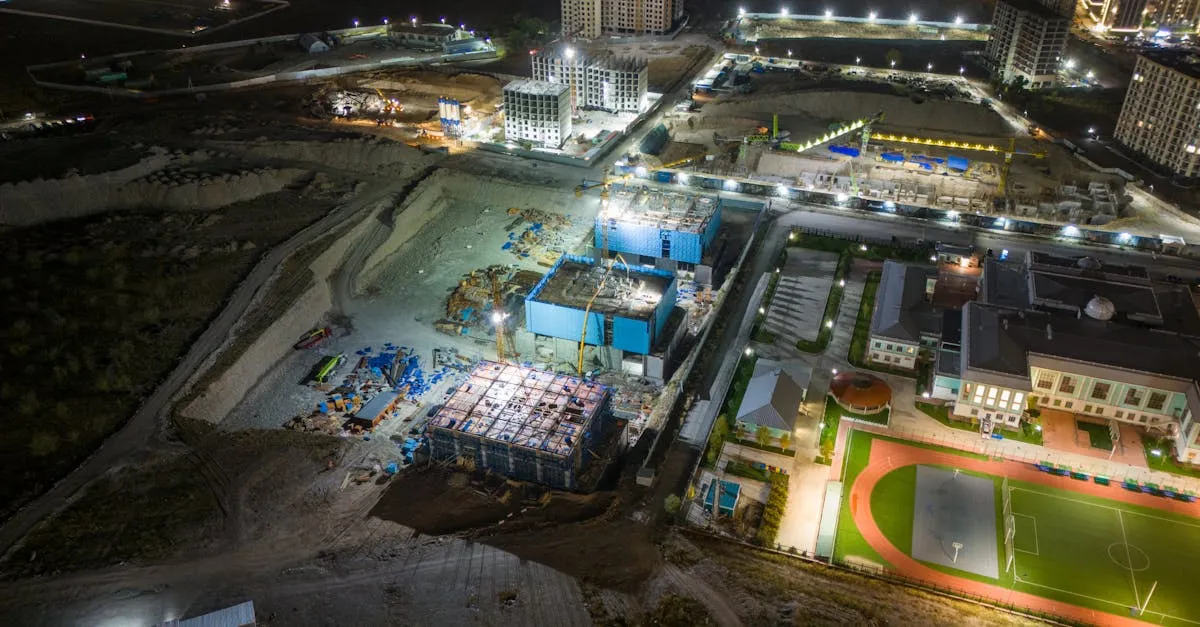
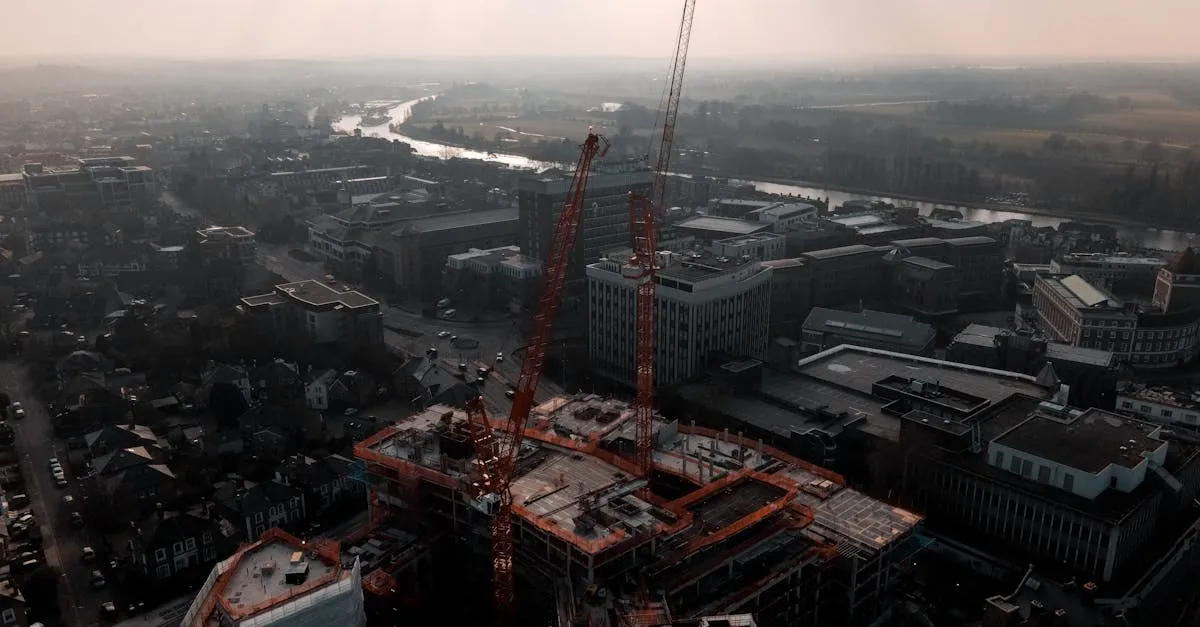
Progress monitoring is the most reliable revenue stream in construction drone work. Superintendents, project managers, and remote stakeholders need visual proof that the job is on track.
For a basic progress flyover where you capture 50 to 100 aerial photos and a quick 4K video for a weekly stakeholder update, you should charge $200 to $400 per visit. This usually takes about 45 minutes on site and an hour of editing back at the office.
If you lock a client into a recurring schedule, structure it as a monthly retainer. A standard monthly retainer for weekly visits runs $800 to $4,000. At the lower end, you are just dropping off unedited photos and a raw video file. At the high end, you are providing weekly high-resolution orthomosaics, annotated photos of specific safety hazards or problem areas, and an updated 3D model every Friday afternoon. Remote investors gladly pay premium retainer fees because your drone footage replaces the need for them to drive to the job site.
3D Modeling for Design Verification: $1,000 to $4,000
When architects and engineers need to verify that the steel framing or concrete pours match their CAD designs, they hire you for 3D modeling. This is not just an automated software output. You have to export your point cloud into software like AutoCAD or Revit to compare the as-is conditions against the as-designed plans.
Because this workflow requires higher-end computer hardware, strict flight planning to ensure maximum overlap, and specialized software skills, the pricing sits between $1,000 and $4,000. A simple facade check to verify window placements on a small commercial building is around $1,000. A full structural comparison of a multi-story hospital or industrial complex will easily hit $4,000.
Thermal Inspections: $500 to $1,500
Commercial construction projects have massive HVAC systems, flat roofs, and complex electrical setups. General contractors use thermal inspections to find water intrusion in flat roofs before the warranty expires, or to spot failing electrical connections in main switchgear before they cause a fire.
Since you need a calibrated thermal camera and the skills to interpret radiometric data, you can charge $500 to $1,500 per inspection. A quick roof scan for moisture mapping after a heavy rain might take an hour and cost $500. A detailed mechanical room inspection requiring multiple flight angles, detailed reporting, and precise temperature delta calculations pushes closer to $1,500.
Final As-Built Documentation: $1,500 to $3,000
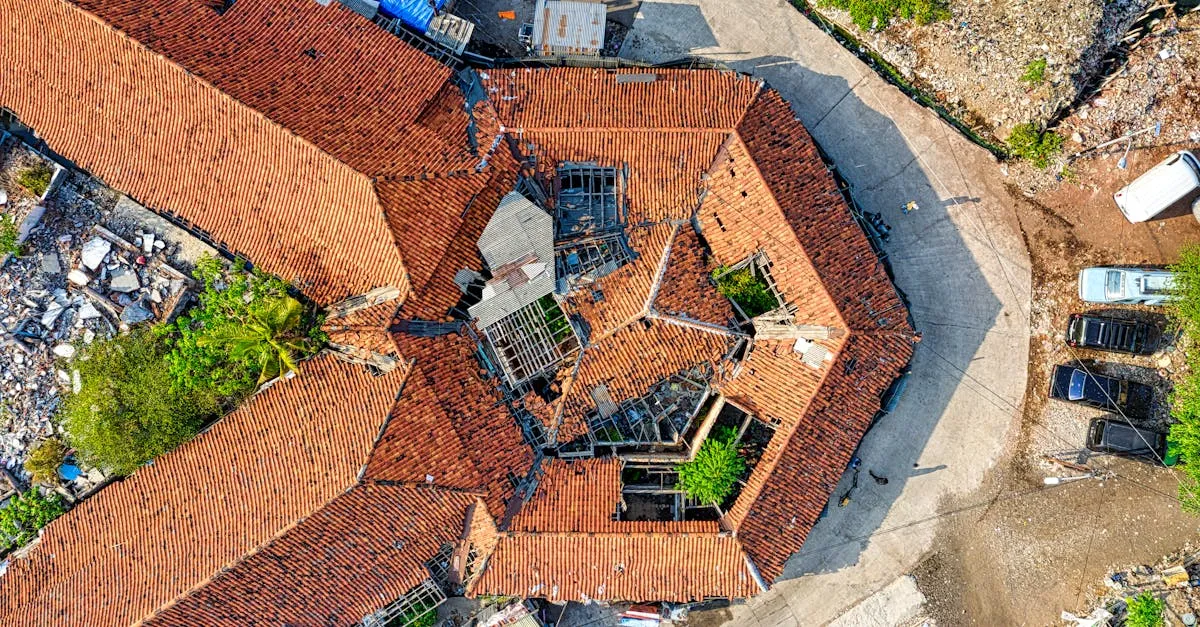
When the project finishes, the owner receives a massive stack of as-built drawings from the architect. But those 2D paper drawings often do not reflect the reality of what was actually built. General contractors hire drone pilots to fly the finished site to create true as-built documentation.
This requires a highly detailed, low-altitude flight plan to capture every inch of the property, followed by a highly accurate orthomosaic and 3D model. This final deliverable serves as a permanent record for the property owner, capturing exact paving square footage, final landscaping grades, and rooftop equipment locations. Pricing for final as-builts ranges from $1,500 to $3,000, depending heavily on the square footage of the buildings and the total acreage of the site.
Choosing Your Pricing Model
You have three main ways to structure your rates: per-visit, project-based, and the monthly retainer.
Per-visit pricing works best for one-off thermal inspections or simple progress photos. It is straightforward but results in unpredictable income. Project-based pricing is ideal for pre-construction surveys, 3D modeling, and final as-builts. You scope the exact deliverables, calculate your time and software costs, add a 30% profit margin, and give the client a flat number.
The monthly retainer is the most effective model for progress monitoring. You agree to show up every Tuesday, for example, for a set fee. The client gets priority scheduling and locked-in rates, and you get predictable cash flow that covers your monthly business expenses.
Structuring Your Contracts
A handshake on a construction site means absolutely nothing when payment is due 90 days late. Your contract needs to protect you.
First, clearly define the deliverables in plain English. If you are doing progress monitoring, specify exactly how many photos, what resolution the video will be, and whether an orthomosaic map is included. If it is not written in the contract, do not do it for free when they ask for it later.
Second, set strict turnaround times. Construction moves fast, and a superintendent who waits five days for progress photos will find someone else. Put your service level agreement in writing. For example: all progress media delivered within 24 hours of flight.
Finally, use auto-renewal clauses for your retainers. State that the monthly agreement automatically renews for successive 30-day periods unless either party provides 15 days written notice to cancel. This stops the client from ghosting you after month two and forces them to actively opt out if they want to stop the service. Also outline your payment terms. Net 15 is standard for drone services. Avoid Net 30 or Net 60 if possible, as cash flow is the lifeblood of a small pilot business.
Frequently Asked Questions
Progress monitoring pricing? Single visits $200-400 for basic capture. Monthly retainers $800-4,000 with higher rates including orthomosaics and 3D models.
Why do pre-construction surveys vary? Basic 10-acre sites $300-500, high-accuracy 100-acre topography $3,000-5,000. RTK/PPK and GCPs drive the cost difference.
Contract structure tips? Define deliverables in writing, 24-hour turnaround, auto-renewal for retainers, Net 15 payment terms.
3D modeling costs? $1,000-4,000 depending on complexity. Simple facade checks around $1,000, full structural comparisons up to $4,000.
When are thermal inspections used? Finding water intrusion in flat roofs before warranty expiration and failing electrical connections. $500-1,500 per inspection.
Why monthly retainers work? Predictable cash flow, reduced acquisition costs, priority scheduling for clients, locked-in rates.
If you want to master these exact workflows and learn how to win construction contracts, check out the free Drone Construction Services course and the Drone Business course at drone.courses. Both are built specifically for Part 107 pilots who want to stop guessing and start charging what their data is actually worth.