Deviation and Issue Detection
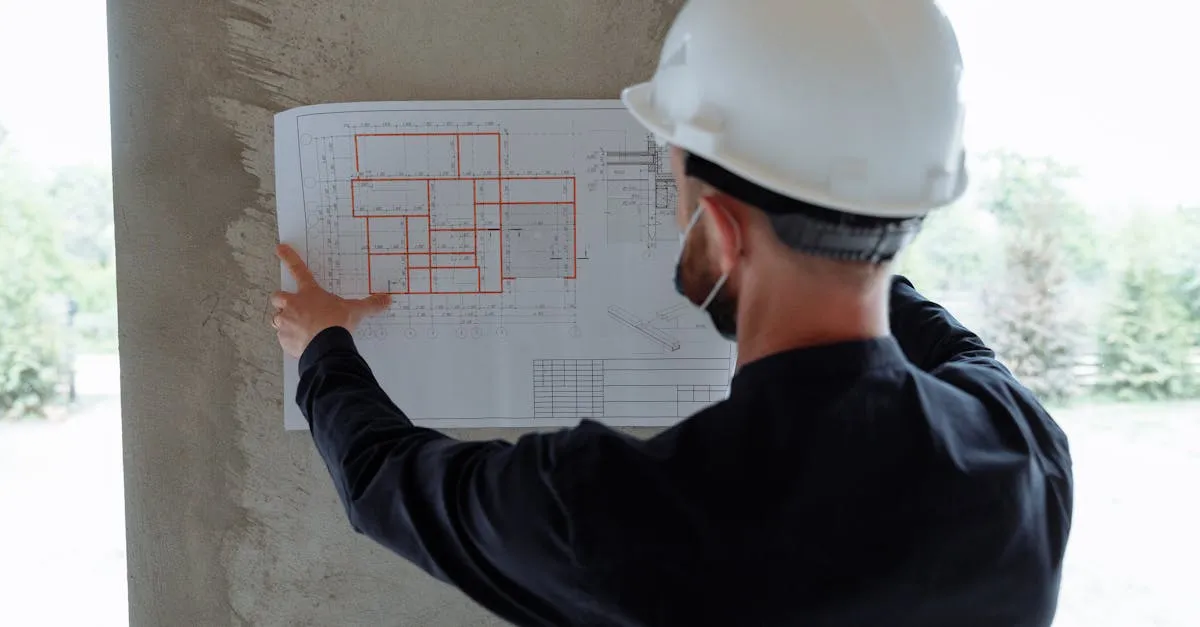 Construction drawings represent the ideal. Reality on the job site is messier. Foundations get poured slightly off alignment. Walls end up a few inches from their designed position. Grades miss their target elevation by a fraction of a percent.
Small deviations are normal. Large deviations are expensive. The difference between catching a problem in week two versus week twelve can be the difference between a $5,000 fix and a $200,000 rework.
How Drone Data Detects Deviations
Overlay the current drone survey on the design plans. Any discrepancy between what was designed and what was built shows up immediately.
This works at multiple scales:
- Building footprint: Compare the as-built outline from your orthomosaic against the architectural site plan. Is the building in the right place? The right orientation?
- Grade elevations: Compare your DEM against the design grading plan. Are the parking lot slopes correct? Does water flow where it should?
- Structural elements: For vertical construction, photogrammetric 3D models reveal whether walls, columns, and floors align with the structural drawings.
Most mapping software lets you overlay CAD files directly on the orthomosaic. The design appears as a transparent layer. Misalignment becomes obvious.
Common Deviations to Watch For
Building placement: The entire structure is offset from its intended location. This happens when the initial layout was wrong or the foundation was poured in the wrong position.
Grade errors: The ground slopes the wrong direction, which causes drainage problems. This is expensive to fix after paving and landscaping are installed.
Structural misalignment: Walls or columns that deviate from the structural plan. In concrete construction, this can mean the entire floor above is affected.
Utility conflicts: Underground pipes or conduits that end up in the wrong location, conflicting with foundations or other utilities.
Encroachment: Construction extends beyond the property line or into setback areas. This creates legal problems if not caught early.
Delivering Deviation Reports
When you find a deviation, report it clearly:
- What is different: Describe the specific element (foundation, grade, wall) and how it differs from the design
- Where it is: Provide coordinates or reference it to a known point on the site
- How much: Measure the deviation in real units (inches, feet, cubic yards)
- Visual evidence: Show the design overlay on the as-built imagery with the discrepancy highlighted
Present this to the project manager promptly. Early detection is the entire point. A deviation report delivered three weeks late helps no one.