Safety and Site Access
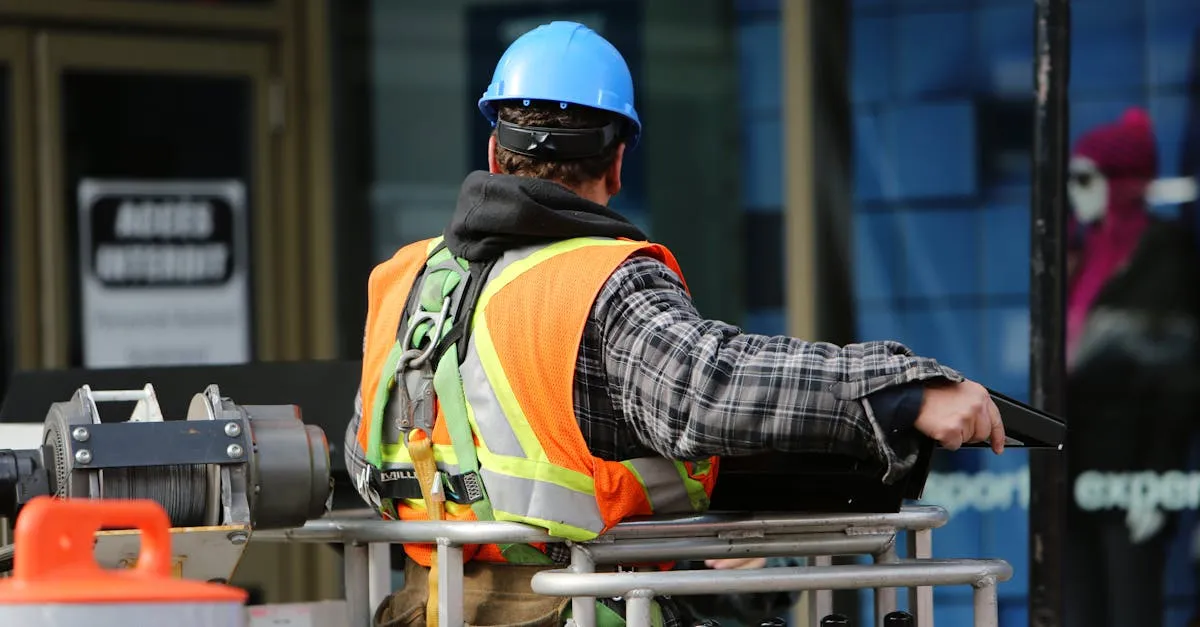 Flying on a construction site is not the same as flying in a park. Construction sites have active heavy equipment, open excavations, crane operations, and workers who are focused on their tasks, not watching for drones overhead. Safety protocols exist to protect everyone, including you.
Personal Protective Equipment
Every construction site requires minimum PPE. If you show up without it, you will be turned around at the gate:
- Hard hat: Non-negotiable. Buy one that fits properly and wear it the entire time you are on site.
- High-visibility vest: Orange or lime green with reflective strips. You need to be visible to equipment operators.
- Steel-toe boots: Dropping a concrete block on your foot is a real possibility on a construction site.
- Safety glasses: Dust, debris, and flying particles are constant hazards.
Some sites require additional PPE: hearing protection near heavy equipment, gloves for handling materials, or fall protection harnesses near open edges.
Site-Specific Safety Orientation
Most construction sites, especially large ones, require a safety orientation before you can enter. This might be a 15-minute briefing from the site safety officer or a formal course that takes an hour.
The orientation covers emergency procedures, hazard locations, restricted areas, and communication protocols. Pay attention. This information could save your life.
Factor orientation time into your pricing. If you lose an hour to safety briefings on every visit, that cost gets built into your rates.
Airspace Coordination on Construction Sites
Construction sites often have cranes, concrete pumps, and other tall equipment that creates airspace conflicts. Before launching, confirm with the site supervisor that:
- No crane operations are scheduled during your flight window
- Concrete pumps and other tall equipment are in known positions
- Workers are aware that a drone will be operating overhead
- No helicopter deliveries are planned (some sites receive materials by air)
If the site has a crane operating, coordinate directly with the crane operator. Your flight plan should avoid the crane’s swing radius entirely.
Communication Protocols
Carry a radio on site, tuned to the site’s communication channel. This lets you hear announcements about hazards, equipment movements, and emergency situations. It also lets you notify the site team when you are launching and landing.
Develop a simple communication protocol:
- Before launch: Radio the site team to announce your flight (drone launching from the northeast corner, flying the site for approximately 20 minutes)
- During flight: Keep the radio on and listen for any announcements
- After landing: Radio the site team to confirm the drone is on the ground
Insurance Requirements
Construction companies often require drone pilots to carry specific insurance coverage. Standard requirements include:
- Liability insurance: $1-2 million per occurrence is common
- Workers’ compensation: If you have employees, this may be required
- Additional insured endorsement: The construction company wants to be listed on your policy
Obtain a certificate of insurance (COI) from your insurance provider listing the construction company as additional insured. Have this ready before your first site visit.
Weather Considerations
Construction sites are particularly sensitive to weather. Wind funnels between buildings under construction. Dust from excavation activities can obscure visibility and get into your drone’s motors. Wet conditions make site surfaces slippery and hazardous for you as well as challenging for the drone.
Check weather conditions before traveling to the site. If conditions are unsafe, notify the project manager and reschedule. Canceling a flight due to weather is always the right call. Flying in unsafe conditions is never worth the risk.